
Living Ayurveda: A Summer Day on the Land
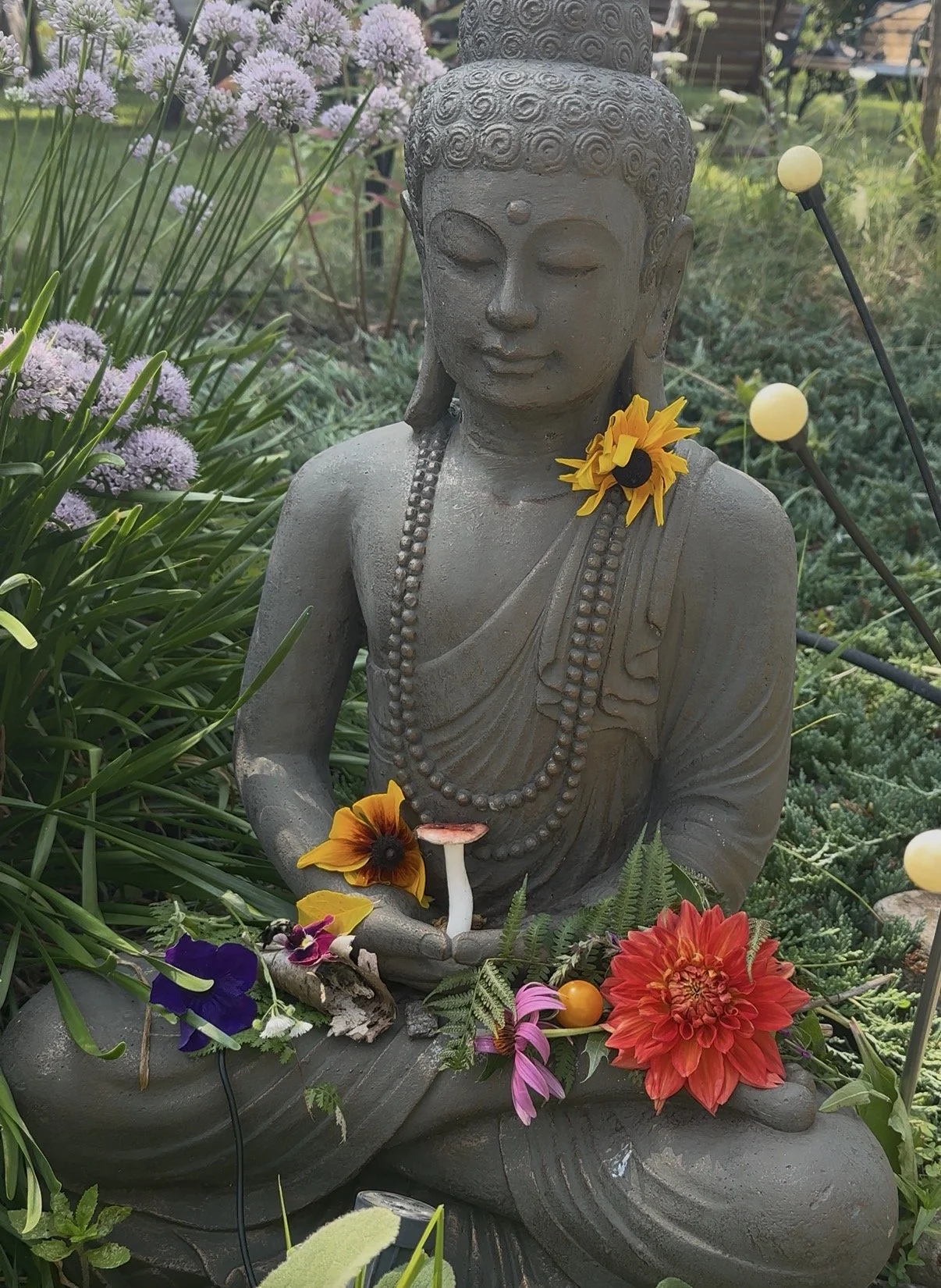
Before the house stirs, before the kids call out, before the day asks anything of me—there is a window.
It is somewhere between 5 and 6 am in the morning, and in Ayurveda, this time has a name: Brahma Muhurta. Literally translated as "the creator's hour," it is the period roughly 48 minutes before sunrise when the quality of the air, the light, and our own nervous system are all in a rare kind of alignment. The mind is naturally clear. The world is naturally still. Ayurveda considers this the most auspicious time to wake, to practice, and to set the tone for the day—not because it requires discipline, but because this window is simply easier than any other. The mind hasn't yet gathered its lists. The day hasn't yet made its demands.
I rise into that stillness and try to protect it.

First: Warm Water and Chai
The first thing I do is boil water—not for coffee, but for myself. One to two cups of warm or hot water before any food is a practice I return to every morning. In Ayurveda, the digestive fire (agni) is like a pilot light when you wake: present but small. Warm water gently stokes it, hydrates the tissues after a night of rest, and begins to move things through without shocking the system. It is unglamorous and it works.
Then comes chai.
This is non-negotiable in our house. Our chai is a daily ritual—spiced, warming, made with intention. In summer, our blend shifts with the season: cardamom, fennel, and fresh mint, all considered cooling, digestive herbs in Ayurveda that support agni without adding heat to an already warm day. Fresh mint is a summer staple here—we grow it right on the deck, so it's steps away and always abundant. There is something about cutting a few sprigs in the early morning quiet and dropping them into a warm pot that makes the whole thing feel less like a routine and more like a ceremony worth showing up for. While it steeps, I move into sense care.
Sense Care and Self-Oiling

With water boiled and chai steeping, I have 10–20 minutes for what Ayurveda calls dinacharya—daily self-care practices. Mine is simple: a warm shower, a light self-oil massage (abhyanga), and a few minutes of sense care. This might mean oil pulling, a little nasya (nasal oil), or simply taking a moment to be fully in my body before the day begins.
The reason Ayurveda emphasizes this so strongly is that the skin, the senses, and the nervous system are intimately connected. Starting the day by caring for your body—even briefly—communicates to your nervous system: you are held, you are tended to, you are not an afterthought. For mothers especially, this matters enormously. We cannot pour from empty, and we cannot pour well from a body that has never been touched with gentleness.
The key: this only works if I'm up before the kids. Twenty minutes of self-care is perfectly achievable at 6 am. After the kids are up, it becomes nearly impossible—and so the early waking protects it.

Breakfast and the Plants

After sense care, it's time to eat—and in summer, this almost always means the deck.
We eat the same thing most mornings, and I have stopped apologizing for this. Oats or muesli. A simple, warm, grounding breakfast that doesn't require a decision before the brain is fully online. Ayurveda values simplicity and consistency in the morning meal: something easy to digest, gently sweet, and grounding so that vata—the airy, mobile energy that tends to rise in the early hours—stays settled. No cold smoothies, no elaborate preparations. Just warmth and ease.
My personal additions: soaked raisins (softened overnight, naturally sweet and gently iron-rich), walnuts (one of Ayurveda's great brain and nervous system foods), a pinch of salt, and a small dollop of ghee. The ghee is important: it lubricates the digestive tract, supports the absorption of fat-soluble nutrients, and brings a quality of ojas—deep vitality and immunity—to whatever it touches. It is one of Ayurveda's most beloved foods, and once you start cooking with it regularly, you'll understand why.
Everyone in the family gets a version of this. Different add-ins, same base. Easy and nourishing.
And then, chai in hand and bowl set down, I water the plants.
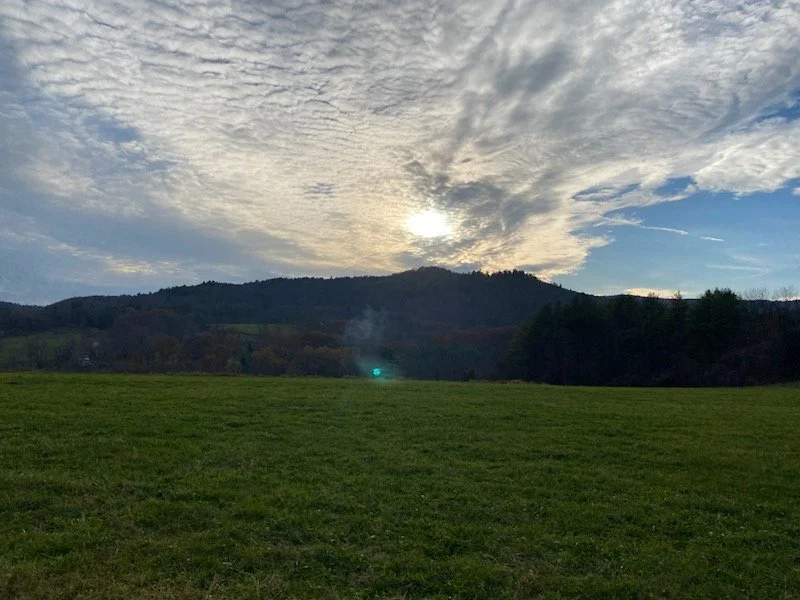
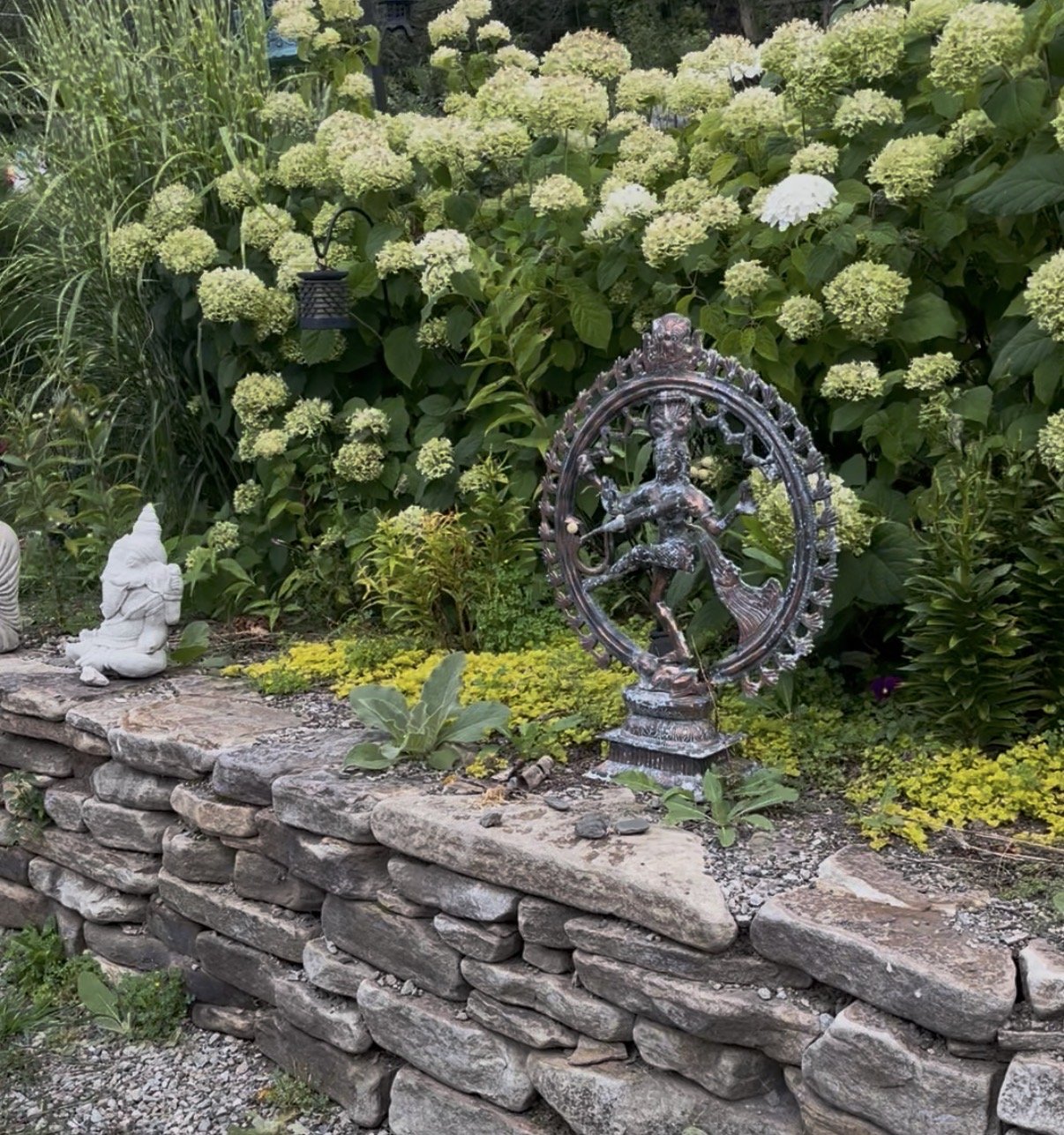
This is one of my favorite moments of the day. Our herbs are cool and dewy in the early morning, ready to drink before the Vermont sun climbs high. I move through the deck slowly—the holy basil (tulsi), the curry leaves, marigolds for decoration, the culinary basil that has become a full obsession this season. There is something quietly grounding about caring for something living before the day's demands begin. You are in a relationship with something that doesn't need you to perform or produce—just to notice and tend.
In Ayurveda, this kind of nature contact is foundational, not optional. Connecting to the natural world in the morning tethers us to the rhythms our bodies are actually designed to follow: light and dark, heat and cool, growth and rest. The morning air in Vermont is cool, moist, and green-smelling in a way that is impossible to replicate indoors. Breathing it deeply, standing in it, is its own medicine.
The plants nourish you. You nourish the plants. It is a simple, reciprocal relationship that steadies something deep.
Work: A Tiny House With a View of the Land

I start work early and have learned that where I work matters as much as when.
I moved my workspace into a small, dedicated space on our property: a tiny house on-site, separate from our home. This single change has been quietly transformative. When work and home share the same walls, the brain never fully commits to either. I would be working and hear something from the kitchen and shift into mom-mode. I would be with the kids and feel the pull of an unanswered email.
Now there is a threshold. I walk to work. I pass the garden, feel the morning temperature, notice what's changed overnight. When I step inside the tiny house, I am at work. When I step out, I am on the land again. That physical transition is its own kind of practice.
Throughout the day, every break means stepping back outside. A moment of fresh air, a glance at the sky, maybe pulling a few herbs or noticing what's ripening. These small interruptions keep me tethered to the season, to the hour, to the living world just beyond the door.

Midday: Rest, Kids, and Water
Around midday, I pause. This is my favorite part of the day.
I walk back to the house, make lunch for the family—usually something simple: kitchari, couscous with vegetables, a light soup—and we eat together. This midday pause is very much in alignment with Ayurvedic teaching: noon is when pitta (fire, heat, digestion) is highest in both the world and the body. It is the best time for your largest, most nourishing meal of the day, and a natural point of rest and gathering before the afternoon continues.
The kids see me present, playful, and available. Then it’s back to work, yet this reset allows the family to feel held. Ayurveda would call this a balanced day.

The Transition Ritual: Walk or Dip Before Going Home
At the end of the workday, before I re-enter home and mother mode fully, I take a walk on our trail or a quick dip to signify the shift.
This is deliberate.
Ayurveda and modern nervous system science agree: direct transitions from "work brain" to "home brain" are hard on the system. You need a bridge. For me, the water or the trail is that bridge—a physical act that signals: this chapter is complete. By the time I walk back toward the house, something in me has already shifted. More present. More patient. More able to receive whatever the evening brings. This is not a metaphor. You really can.
Evenings: Basil, the Deck, and a Clean House
This summer, I have declared myself a pesto-in-training.
Basil has appeared in many evening meals in one form or another, and I have no regrets. In Ayurveda, sweet basil is considered a sattvic herb—one that promotes clarity, lightness, and a calm, open quality of mind. It is mildly anti-inflammatory, supports digestion, and has been used traditionally to ease anxiety and support respiratory health. Its close cousin, holy basil or tulsi, is one of Ayurveda's most revered adaptogens—a plant that helps the body navigate stress with more grace. Growing both feels like tending to medicine and dinner at the same time.
When the evenings are cool enough, we eat on the deck. Otherwise, a walk after dinner—good for digestion, for conversation, for watching the light change on the land.
And then, before bed: we clean up.
This sounds small. It is not. Ayurveda speaks a great deal about the quality of our environment as a direct reflection of the quality of our mind. A cluttered, unfinished space carries a quality of tamas—heaviness, stagnation—into the next morning. Tidying before sleep is not about perfection; it is about completing the day fully so the next one can begin fresh. When the kids wake up to a clean kitchen and an ordered home, the morning has already been given a gift.
It is, in the end, a full circle: stillness at the start, completion at the close, and the land woven through all of it in between.

This is what living Ayurveda looks like for our family—not a strict protocol, but a rhythm that holds us.
If any part of this resonates, we'd love for you to experience it more deeply.
Our 220-Hour Ayurveda Foundations Training begins next month—a hybrid program that brings these rhythms into your real life, wherever you are.
And our Fall Ayurveda Reset (Sept 23–27) is opening a waitlist—a gentle way to rejuvenate and pause for the change of season before winter arrives.
→ Learn more about the Foundations Training
→ Join the Fall Cleanse Waitlist