
Why Your Skin Keeps Breaking Out (And Why It's Not Really a Skin Problem)
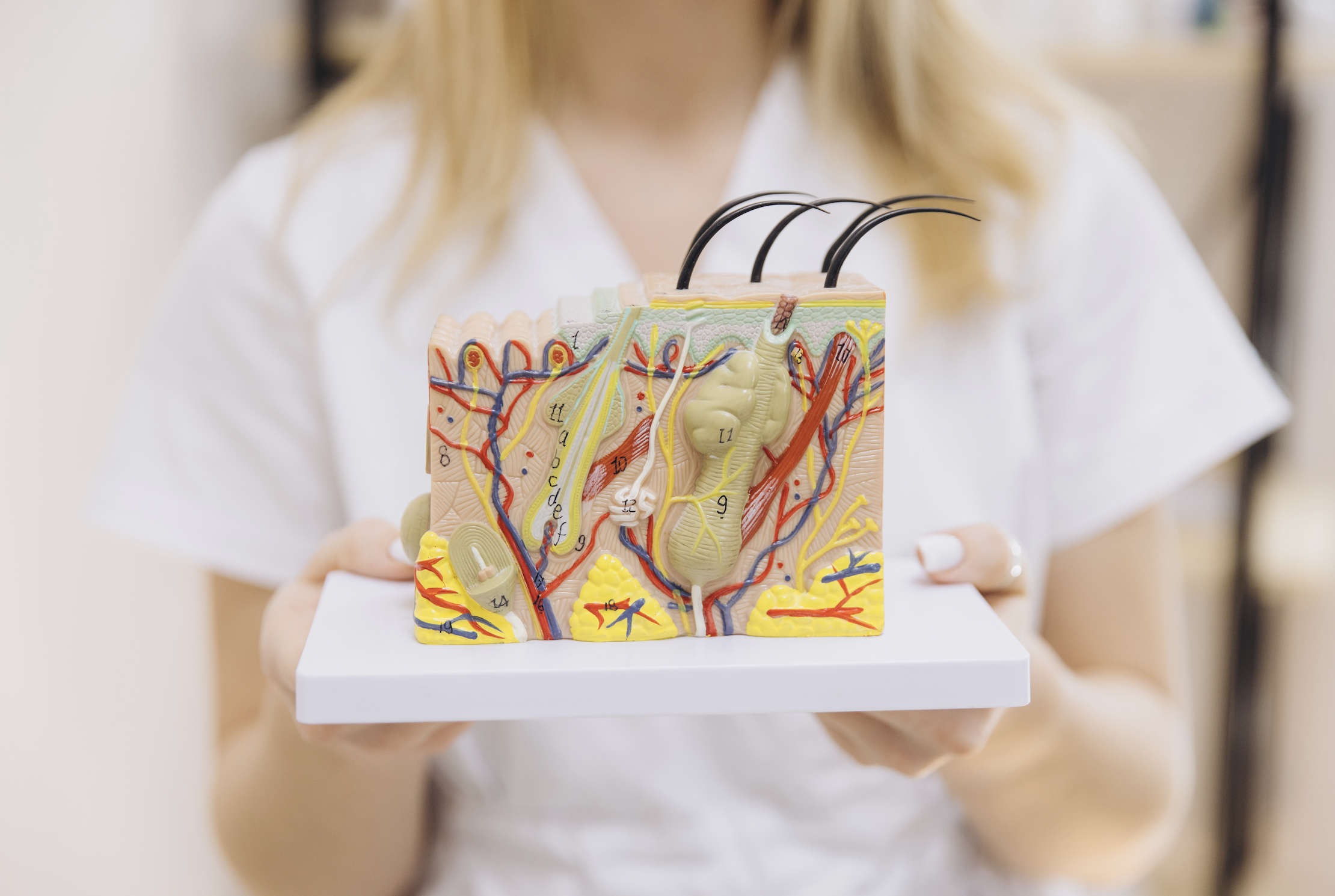
If you've tried every clean product, eliminated gluten, switched to natural skincare, and your skin still flares — this post is for you.
The frustrating truth is that most chronic skin conditions are not skin problems. They are blood problems. And until we address what is happening at that deeper tissue level, the skin will keep delivering the same message on repeat.
Here is the Ayurvedic framework I use with my clients, and what it means practically for your skin.
Your Skin Is Built From the Inside Out
In Ayurveda, the body builds its tissues sequentially. Food is digested into plasma, plasma nourishes blood, blood nourishes muscle, and so on through seven layers of tissue — the last and outermost being the skin. Each layer depends on the health of the one before it.
This means the quality of your skin — its clarity, hydration, resilience, and tendency to flare — is a downstream reflection of everything that came before it: your digestion, your liver function, your blood tissue, and the overall heat and clarity of your system.
No serum builds skin from scratch. Your food and blood do.
What Is "Disturbed Blood Tissue"?
In Ayurvedic medicine, the blood tissue — called rakta dhatu — is considered one of the most important tissues for skin health. When rakta is healthy, the skin is clear, cool, and radiant. When rakta is disturbed, the skin shows it.
Rakta becomes disturbed when:
Diet is consistently hot, spicy, fermented, or processed — overheating the blood
Stress and irregular sleep raise pitta (heat and intensity) in the system over time
The liver and digestive system are overburdened, leaving metabolic waste (ama) in the bloodstream
Suppression of earlier symptoms — through steroids, antihistamines, or simply covering up a rash — pushes the imbalance deeper without resolving it
When the blood is too hot, too heavy, or stagnant, it has to push that burden somewhere. The skin is the fastest and most accessible exit. This is why flares seem to appear "randomly" — in response to stress, food, heat, or sleep disruption — because all of those things directly affect the quality of the blood.
Three Quiet Signs Your Blood Is Behind Your Skin Issues
You may not think of your skin condition as a "blood" issue. But here are three signs that rakta dhatu is involved:
1. You flush easily.
Heat, stress, alcohol, spicy food, or even a hot shower causes your face or chest to redden quickly. This is excess pitta in the blood looking for an outlet.
2. Your breakouts or rashes seem random and unexplainable.
Your dermatologist says your labs are normal. Your diet is clean. But the skin still reacts. When the blood tissue is reactive, external triggers only need to be small to cause a large surface response.
3. Your skin feels hot or itchy at night even when the room is cool.
The liver and blood are most active in the pitta hours — roughly 10pm to 2am. Night-time itching and heat in the skin is a classic sign that the blood and liver are working hard to process excess heat and toxins.
Why Skin Conditions Left Untreated Can Become Something Else
This is one of the most important and least discussed pieces of Ayurvedic skin medicine.
The same blood that feeds the skin also feeds the lungs, the heart, and the nervous system. In Ayurveda, there is a recognized progression — what we call a samprapti or disease pathway — where chronic, untreated heat and toxicity in the blood can migrate from the skin into the respiratory channels, and eventually into the channels of the heart and mind.
Clinically, I have seen this in clients who had significant childhood eczema that "resolved" on its own, only to develop adult-onset asthma, chronic sinusitis, or inflammatory cardiac symptoms years later. The eczema didn't disappear — it migrated.
This is why we take skin conditions seriously even when they seem mild. Early, proper treatment protects more than just the surface.
Why Symptoms Fading Is Not the Same as Healing
One of the most common patterns I see in practice is this: a client with hives or eczema starts an Ayurvedic protocol, symptoms begin to improve after a few weeks, they feel better, they stop their herbs — and six weeks later the rash is back, often worse than before.
In Ayurvedic medicine, visible symptom reduction is step one. There are two more steps after that:
Retract: Bring the visible symptoms under control. Reduce the immediate heat and reactivity in the blood and skin.
Stabilize: Help the blood tissue, lymph, and skin remember what "normal" feels like at a deep cellular level. This takes weeks, sometimes months. The tissue needs time to rebuild without the reactive pattern reasserting itself.
Rejuvenate: Support the tissue in becoming genuinely resilient — so that the next stressor (a hard week, a wedding, a late night) does not trigger an immediate relapse. This is where the real shift happens.
Stopping at step one is like stopping antibiotics on day three because your fever dropped. The root is still there.
What This Looks Like in Practice: Inside and Outside
Addressing skin through an Ayurvedic lens means working on both dimensions simultaneously.
From the inside:
Cooling and lightening the diet — reducing heat-producing foods, eating earlier, and simplifying meals to support the liver and digestion
Supporting the digestive fire (agni) so that ama stops accumulating in the blood
Herbal support for the blood, lymph, and liver — chosen based on the individual's pattern, not a generic "detox"
Sleep and nervous system regulation, because chronic sleep deprivation is one of the fastest ways to heat the blood
From the outside:
Gentle, non-stripping cleansers that purify without disrupting the skin barrier — I use and recommend Shankara's Deep Cleanser, a traditional herbal powder formula with red sandalwood and clay
Daily facial oiling when there is no active flare, to nourish and protect the outermost skin layers
Kansa wand massage once the skin has calmed — this traditional Ayurvedic tool works with the metal's natural properties to release excess heat and acidity from the skin surface, improve microcirculation, and support lymph flow. The Shankara Kansa Wand is the one I use in clinic and recommend for home practice
Avoiding aggressive exfoliation, harsh actives, and heat-producing treatments during active flares
A Note on Spring and Skin
April is a particularly relevant time to address skin health. In Ayurveda, spring is kapha season — the body begins to liquefy and move the accumulations of winter. Toxins and heaviness that have been sitting in the tissues through the cold months begin to circulate, and for many people this means spring flares: increased breakouts, hives, congestion, and dull or reactive skin.
Rather than being alarmed by spring flares, think of them as the body mobilizing for a reset. Spring is the ideal time to support the liver and blood with lighter food, more movement, and targeted herbal support — so that what is moving through the channels actually exits cleanly, rather than settling back into the skin.
Working With Me
If you are stuck in a cycle of flares — seasonal, stress-triggered, or seemingly random — this is exactly the kind of clinical pattern I work with in individual consultations and at our retreats at Sētu Vermont.
A consultation gives us 60–90 minutes to map your specific skin pattern through an Ayurvedic lens: what kind of blood disturbance is present, which stage of the disease you are in, and what a realistic, graduated protocol looks like for you — internally and externally.
Our retreats offer the chance to experience this work in your body over several days: food that genuinely supports the blood and liver, daily oil treatments, movement, and the kind of rhythm that allows the nervous system and digestion to reset together.
If you are ready to stop managing symptoms and start addressing the root, I would love to work with you.
Emily is an Ayurvedic practitioner and co-founder of Sētu Vermont. She works with clients virtually and in person, with a focus on chronic inflammatory conditions, nervous system health, and heart-centered Ayurvedic care.